
Forget the Fiorentina for a Minute: Ghigo’s Best Dishes Go Much Deeper into the Maremma

Osteria Ghigo sits at Viale Giacomo Matteotti 15 in Grosseto, close enough to the historic centre to make it an easy stop, but with a culinary identity that looks firmly beyond the city walls and into the Maremma. The restaurant defines itself through traditional regional cooking, and the menu follows that line with handmade tortelli, pappardelle al cinghiale, pici, Maremmana beef, rabbit, peposo and long-cooked game.
There is no attempt to modernise this vocabulary for effect. Ghigo is at its best when pasta is substantial, ragù is dark, meat is slow-cooked and side dishes actually belong beside them rather than acting as decoration. That confidence gives the restaurant a stronger identity than another generic Tuscan address built around Fiorentina alone.
Our 2026 meal left us with the pleasant feeling of having eaten far too much for entirely defensible reasons. The sequence of cured meats, handmade pasta, game and slow-cooked beef had a kind of momentum that made stopping feel almost rude. Grosseto has plenty of restaurants claiming Maremman roots; Ghigo tastes most convincing when it simply puts the territory on the plate and gets out of the way.
Start with Liver, Salumi and Something Sharp
A proper Maremman meal does not need a delicate opening.
Crostini with chicken-liver pâté bring the darker side of Tuscan antipasti immediately: rich, mineral and slightly bitter, with toasted bread providing the texture the topping needs.
A mixed board of Tuscan salumi and cheeses pushes the table further into cured meat, pecorino and preserved flavours. The important thing is contrast. Giardiniera, pickled vegetables or something acidic matter because without them the first twenty minutes of dinner risk becoming an uninterrupted wall of fat and salt.
This is food made to encourage wine.
Parmigiana Is the Softer Counterpoint
The presence of parmigiana di melanzane gives the antipasti section another register.
Aubergine brings sweetness, tomato acidity and cheese enough richness to make the dish substantial without competing directly with the cured meats.
It is a surprisingly smart choice before a game-heavy meal.
Where crostini and salumi push hard from the first bite, parmigiana gives the palate somewhere quieter to begin.
Pappardelle al Cinghiale Are the Pasta We Came For
The pappardelle al ragù di cinghiale are one of the clearest expressions of Ghigo’s style.
Wide pasta and wild boar make immediate sense together. Pappardelle have enough breadth to catch a dense sauce, while cinghiale brings a darker, leaner flavour than domestic pork or conventional beef ragù.
The best versions do not bury the meat under tomato.
They let wine, aromatics and long cooking shape the sauce while preserving the unmistakable flavour of game.
This is not subtle pasta, but it has a clarity that matters more.
The Gran Tortelli Are the Other Essential Order
Ghigo also leans heavily on large handmade tortelli, served either simply with butter and sage or with ragù from Maremmana beef.
The butter-and-sage version exposes the pasta itself.
The filling needs to be generous but balanced, the dough thin enough to remain tender and the butter restrained enough not to turn the plate into liquid fat.
With Maremmana ragù, everything becomes deeper and more substantial. The local beef gives the dish a stronger territorial identity, while the oversized tortello format turns each piece into something closer to a course than a mouthful.
If two people are sharing, order one pasta with game and one filled pasta. The contrast explains the kitchen better than doubling down on ragù.
Pici Keep the Tuscan Side Firmly in View
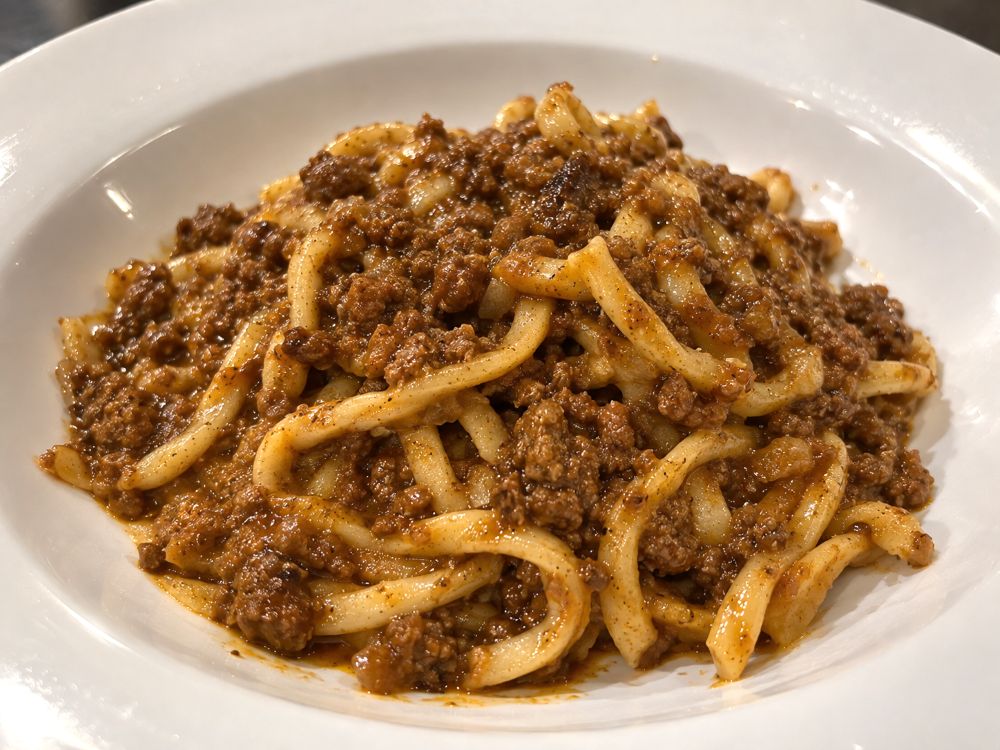
Pici all’aglione provide a simpler and more direct alternative.
The thick handmade-style pasta has enough chew to stand up to garlic-heavy tomato sauce without losing itself. Aglione should be aromatic rather than harsh, giving sweetness and depth instead of raw garlic aggression.
After salumi and liver, this is the pasta that resets the meal.
It still feels Tuscan, but with less weight than wild boar or beef ragù.
Peposo di Maremmana Is Where Dinner Gets Serious
The peposo made with Maremmana beef is one of the dishes that best suits the restaurant.
Beef, red wine, garlic and black pepper are left to cook until the meat softens and the sauce turns dark and concentrated. There is almost nothing decorative about it.
That is precisely the point.
Peposo succeeds through reduction, collagen and patience. Black pepper needs to remain present but integrated, while wine gives the dish depth without leaving acidity behind.
This is the second course we would choose if the table wants one plate that feels unmistakably Tuscan.
Wild-Boar Stew Goes Even Further

The stewed wild boar with sage purée pushes further into Maremman territory.
Game can easily become dry or overly aggressive, so long cooking and a softer accompaniment matter. Sage gives the purée enough aromatic character to meet the meat without competing with it.
The combination is earthy, dark and entirely appropriate to a restaurant that does not pretend the Maremma is only about grilled steak.
For us, this is more interesting than another anonymous tagliata.
Rabbit Keeps the Menu Traditional without Repeating Itself
Rabbit also appears among the restaurant’s recurring meat preparations.
It brings a leaner, more herbal direction after beef and boar. Rabbit needs care because it dries quickly, and the best treatments rely on slow cooking, aromatics and enough moisture to preserve the meat.
In a menu dominated by strong flavours, it creates welcome variation.
This is traditional country cooking rather than luxury, which makes it particularly well suited to Ghigo.
Fiorentina Is There, but It Is Not the Whole Story
Naturally, Fiorentina remains part of the offer.
A thick steak cooked over high heat, rare inside and deeply browned outside, still has its place at any serious Tuscan table.
But Ghigo is more interesting when you look beyond it.
Pappardelle, tortelli, peposo and cinghiale say more about the kitchen’s personality than simply ordering the largest piece of beef available.
The steak is good territory.
The slow-cooked dishes are better storytelling.
Wine Pairings
Pappardelle al cinghiale: Le Pupille Morellino di Scansano — fresh Sangiovese fruit and acidity keep wild boar from becoming too heavy.
Gran tortelli with Maremmana ragù: Morisfarms Morellino di Scansano — savoury structure and dark cherry fit beef and handmade pasta naturally.
Peposo: Rocca di Frassinello Poggio alla Guardia — deeper fruit and spice stand up to wine, pepper and slow-cooked beef.
House Wine Makes Sense Here
Ghigo is the kind of restaurant where a local bottle or straightforward house red feels completely at home.
Morellino di Scansano is the obvious regional direction because its acidity works across cured meats, ragù, game and beef without demanding too much attention.
Wine should support the table here rather than become a parallel tasting exercise.
That attitude suits the room.
Tiramisù Is the Natural Finish
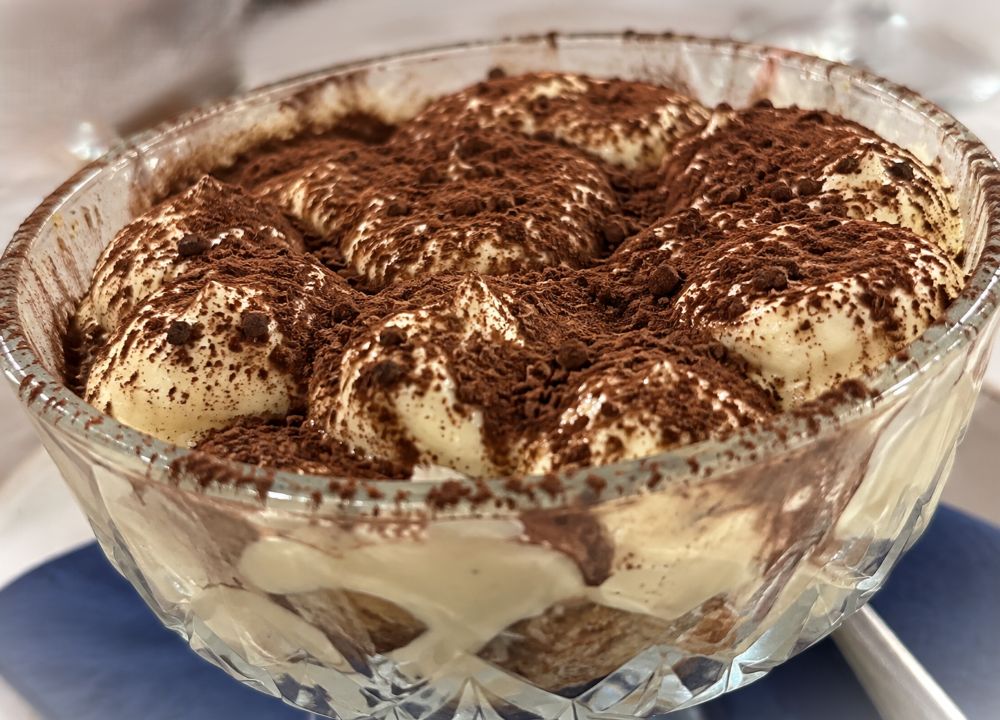
Tiramisù remains one of the recurring desserts and makes complete sense after such a savoury meal.
Coffee bitterness provides the necessary break from meat and cheese, while mascarpone keeps the ending indulgent without introducing another heavy flavour profile.
Cheesecake and other house desserts may appear, but tiramisù is the more coherent choice after a fully Maremman sequence.
There is little need to complicate the final ten minutes.
The Room Matches the Food
The restaurant’s interior mixes rustic elements and old masonry with a cleaner contemporary finish.
That balance suits the menu particularly well.
Too much farmhouse nostalgia would make the room feel staged; too much contemporary polish would clash with tortelli, cinghiale and peposo. Ghigo sits somewhere in the middle.
It feels comfortable rather than designed to impress.
The food benefits from that lack of theatre.
Service, Atmosphere and Value
Ghigo operates with the informality expected from an osteria, but the menu is substantial enough to support a long lunch or full dinner rather than a quick plate of pasta.
The smartest way to eat here is not to order everything traditional at once. One antipasto, two different primi shared across the table and one slow-cooked meat course already give a complete view of the kitchen.
During our 2026 meal, that rhythm felt exactly right. The service had enough familiarity to keep the table relaxed, and the food never needed an explanation to justify itself.
That is perhaps the strongest compliment we can give the place: Ghigo does not make Maremman cooking feel historical. It makes it feel current simply by cooking it properly.
Useful Information
- Address: Viale Giacomo Matteotti 15, 58100 Grosseto, Tuscany
- Cuisine: Traditional Maremman and Tuscan
- Style: Osteria with a strong regional focus
- Dishes to look for: Pappardelle al cinghiale, gran tortelli, pici, peposo di Maremmana, rabbit and wild-boar stew
- Other specialties: Fiorentina, salumi, cheeses and liver crostini
- Handmade pasta: Central to the menu
- Local beef: Maremmana features in several preparations
- Wine focus: Tuscan and regional reds
- Reservations: Available
- Telephone: +39 331 461 7805
- Email: [email protected]
- Best for: Handmade pasta, game, slow-cooked meat and a full Maremman meal near central Grosseto
Our Rating of Osteria Ghigo
Food: 9.2/10
The kitchen is strongest when it stays close to game, handmade pasta and slow-cooked Maremman meat.
Antipasti: 9/10
Liver, salumi and traditional Tuscan flavours give the meal a strong start.
Pasta: 9.4/10
Pappardelle and gran tortelli are the clearest reason to come.
Traditional Maremman Cooking: 9.4/10
Peposo, rabbit and wild boar give the menu real regional depth.
Meat: 9.3/10
Maremmana beef and game are treated with more imagination than a steak-only menu would allow.
Desserts: 8.8/10
Classic and appropriately straightforward after a substantial meal.
Wine: 9/10
Regional Tuscan reds fit the cooking naturally.
Service: 9/10
Relaxed and personal enough to suit the osteria format.
Atmosphere: 9/10
Rustic without becoming theatrical.
Value for Money: 9.1/10
The restaurant delivers substance through technique and regional ingredients rather than cosmetic luxury.
Overall Rating: 9.2/10

