
Trattoria Il Giogo: Grosseto’s Maremma Served Slow, Dark and Generous

Trattoria Il Giogo sits at Via Cesare Battisti 31, close to Grosseto’s historic centre and the Medici walls. The room is small, rustic and unmistakably trattoria in spirit: limited tables, a chalkboard-style menu and a kitchen built around Maremman and Tuscan cooking rather than presentation.
That matters because the strongest dishes here belong to the part of Tuscany that still cooks with time, offcuts, bread, wine, vegetables and sauces that are meant to soak into something. Acquacotta, pici, ragù, peposo, rabbit and homemade desserts make far more sense than elaborate contemporary plates.
Our 2026 meal was one of those lunches that becomes more satisfying as it goes on. Nothing arrived posing for attention; the pleasure came from deep sauces, properly substantial pasta and dishes that tasted slow-cooked rather than assembled. In a city surrounded by Maremman tradition, Il Giogo still feels like a trattoria that lives inside it rather than one borrowing the vocabulary.
Acquacotta Is the Dish That Explains the Territory
Few dishes say Maremma as directly as acquacotta.
Its origins are agricultural and pastoral: stale bread, vegetables, tomato, onion and whatever the season made available, transformed into something far more satisfying than the name — literally “cooked water” — might suggest.
The best versions are neither soup nor stew. Bread thickens the broth, vegetables provide sweetness and acidity, while olive oil carries everything together.
This is not the dish to order for spectacle.
Pici Cacio e Pepe Bring More Weight
The pici cacio e pepe move immediately into heavier territory.
Pici are thick, hand-rolled Tuscan strands with enough chew to stand up to a dense cheese-and-pepper sauce. They behave very differently from spaghetti: less delicate, more rustic and far more capable of carrying serious richness.
The balance is the entire game. Too much cheese turns the plate clumsy; too little pasta water leaves it grainy.
Ragù Is Where the Kitchen Feels Most at Home
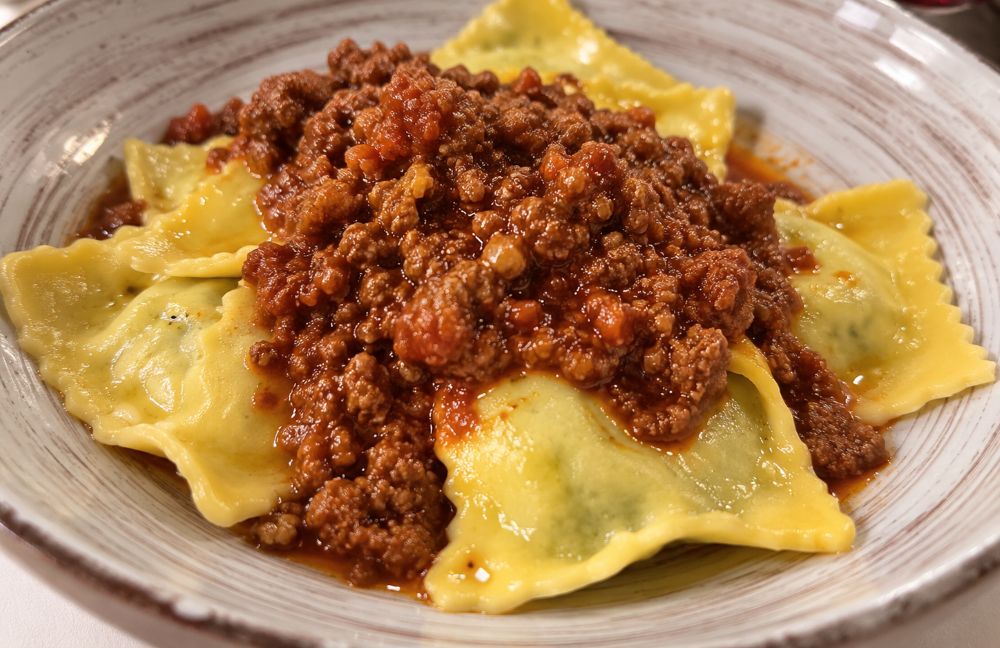
A proper Tuscan ragù should taste of patience.
The sauce needs long cooking, enough meat to build depth and just enough tomato to bind rather than dominate. Fresh or substantial pasta gives it the right architecture.
This is the kind of plate that rarely photographs dramatically but often tells you more about a trattoria than anything else on the menu.
By the end of our meal, the ragù was one of the things we remembered most: dark, savoury and completely uninterested in fashion.
Penne with Crab Show the Menu Is Not Entirely Inland
The presence of penne alla polpa di granchio gives Il Giogo a different dimension.
Crab introduces sweetness and salinity into a menu otherwise dominated by land-based Tuscan flavours. Penne may not sound adventurous, but they make sense with a sauce substantial enough to cling inside the tubes.
The important thing is keeping the crab recognisable.
Too much cream would erase it; too much tomato would push the dish towards generic seafood pasta.
Handled with restraint, it becomes a welcome break from meat and game.
Peposo Is Exactly the Kind of Second Course We Want Here
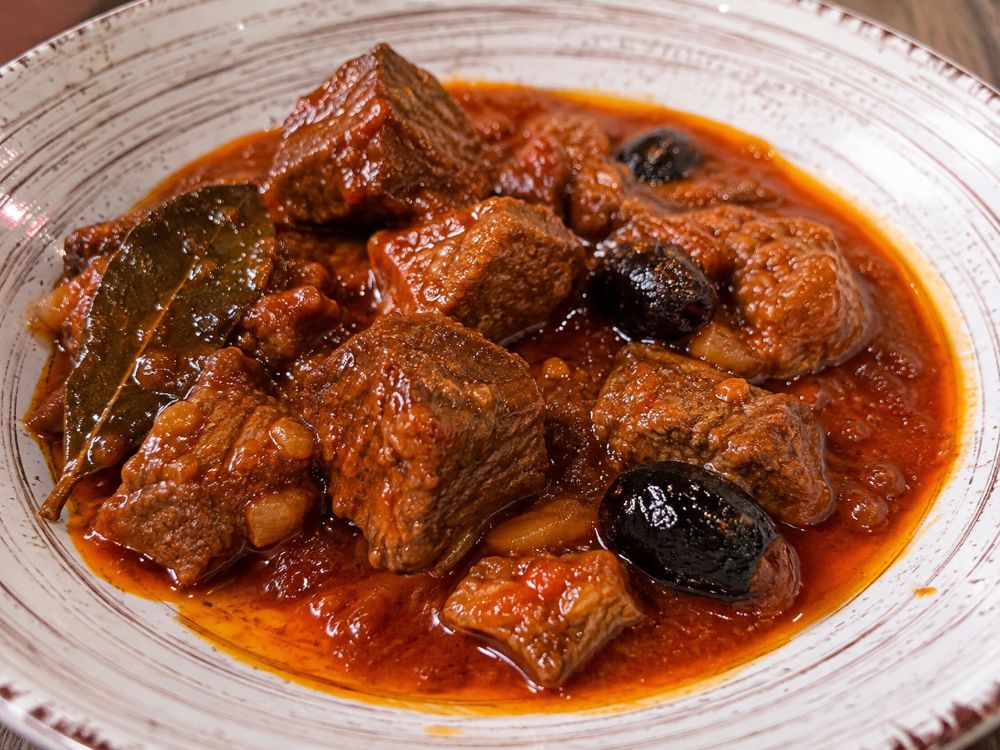
Peposo belongs naturally in a restaurant like this.
The dish is built on beef, red wine, garlic and black pepper, then left to cook until the meat softens and the sauce darkens into something almost glossy.
There is no need for elaborate garnish.
The whole point is concentration.
Black pepper should remain a real presence rather than a decorative finish, while the wine needs enough time to lose raw acidity and become part of the meat.
This is winter Tuscany in a bowl.
Coniglio all’Etrusca Has More Character Than Another Tagliata
Rabbit all’Etrusca is one of the menu’s more distinctive traditional plates.
Rabbit is lean and unforgiving, so the cooking needs moisture, aromatics and enough fat to stop the meat drying out. In central Tuscan cooking, herbs, wine and slow heat are often more important than sauce.
The result should taste pastoral rather than refined.
That is precisely why we would choose it over a generic steak.
Trippa Belongs on the Table Too
A trattoria in Grosseto does not need to apologise for trippa.
Long cooking softens the texture while tomato and aromatics bring sweetness and acidity. The dish becomes rich without becoming expensive or luxurious.
This is cucina povera in the most literal and useful sense: modest ingredients converted into something deeply flavoured through technique.
It also gives the menu more historical depth than another plate built around premium beef ever could.
Cheese and Cured Meats Keep the Start Properly Tuscan
A platter of local salumi and pecorino is the obvious antipasto if the table wants something to share.
Tuscan cured meats bring salt and spice; pecorino gives richness and a slightly granular texture; bread provides the neutral base the combination needs.
There is very little reason to complicate it.
The smartest move is to keep the antipasto small enough to leave room for pasta.
At Il Giogo, restraint at the beginning pays off later.
Wine Pairings
Acquacotta: Bruni Plinio Vermentino Maremma Toscana — herbal freshness and citrus suit tomato, vegetables and olive oil.
Pici cacio e pepe: Le Pupille Morellino di Scansano — bright acidity and moderate tannin cut through Pecorino without overwhelming the pasta.
Peposo: Rocca di Frassinello Poggio alla Guardia — darker fruit and Mediterranean spice fit long-cooked beef and black pepper.
House Wine Feels More Natural Than Ceremony
This is not the kind of trattoria that needs an elaborate wine ritual.
A straightforward Tuscan red, especially Morellino di Scansano, is the natural companion to ragù, trippa and peposo. White wine makes more sense with crab and lighter vegetable dishes.
The point is compatibility rather than prestige.
At a table like this, wine should help the food move.
Dessert Should Stay Homemade
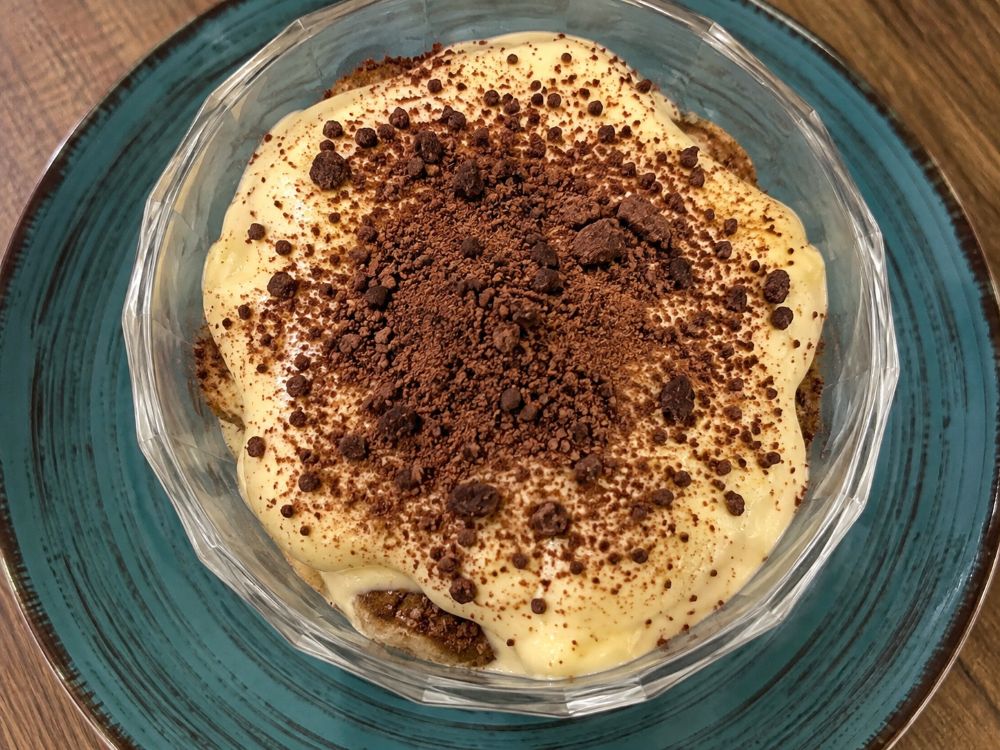
The dessert section traditionally includes familiar trattoria endings such as tiramisù, cheesecake, zuppa inglese and crema catalana.
That is exactly the right register.
After pici and peposo, a technically elaborate plated dessert would feel almost comic. Coffee bitterness, custard, mascarpone or something baked and creamy are enough.
The best ending here is one that still feels made in a kitchen rather than designed in a pastry laboratory.
A Small Room Helps the Restaurant
Il Giogo is compact, with only a limited number of tables. That naturally changes the rhythm of the meal.
There is no huge dining room to manage, no need to manufacture atmosphere and no sense that the restaurant is processing dozens of tables at once. The space feels closer to a family trattoria than a commercial Tuscan concept.
That intimacy suits the food particularly well.
Peposo and acquacotta would lose something in a designer dining room.
Service, Atmosphere and Value
Service follows the same uncomplicated logic as the kitchen: informal, direct and focused on keeping the meal moving naturally.
Choose one traditional starter, one substantial pasta and, if appetite survives, share a braised or slow-cooked second course.
Il Giogo is not trying to compete with modern Tuscan fine dining. Its attraction is almost the opposite: familiar dishes, limited fuss and a very clear sense of place.
Useful Information
- Address: Via Cesare Battisti 31, 58100 Grosseto, Tuscany
- Cuisine: Tuscan and Maremman
- Setting: Small traditional trattoria near Grosseto’s historic centre
- Dishes to look for: Acquacotta, pici cacio e pepe, ragù, peposo, coniglio all’Etrusca and trippa
- Other specialties: Penne with crab, local salumi and pecorino
- Homemade desserts: Available
- Vegetarian options: Available
- Gluten-free options: Available
- Reservations: Recommended due to the limited number of tables
- Telephone: +39 331 768 1798
- Best for: Traditional Maremman cooking, slow-cooked meat, substantial pasta and an intimate trattoria meal in Grosseto
Our Rating of Trattoria Il Giogo
Food: 9.1/10
The kitchen is strongest when it stays close to slow-cooked Maremman tradition.
Traditional Tuscan Cooking: 9.4/10
Acquacotta, peposo, trippa and rabbit give the menu genuine territorial depth.
Pasta: 9.2/10
Pici and ragù fit the restaurant’s robust style particularly well.
Meat: 9.2/10
Braised dishes are more interesting here than conventional grilled cuts.
Seafood: 8.6/10
A smaller part of the identity, but crab brings welcome range to the pasta section.
Desserts: 8.9/10
Classic, homemade and properly suited to the trattoria format.
Wine: 8.8/10
Tuscan reds and straightforward local drinking make the most sense with the food.
Service: 9/10
Informal and natural, without unnecessary performance.
Atmosphere: 9.1/10
The compact room reinforces the sense of a genuine neighbourhood trattoria.
Value for Money: 9.3/10
The appeal lies in substantive traditional cooking rather than expensive ingredients or presentation.
Overall Rating: 9.2/10

