
Where to Eat South Tyrolean Food in Merano: Inside Forsterbräu

Forsterbräu Meran is not merely a convenient place to drink a cold beer after wandering through Merano. Its history reaches back to 1869, when Josef Fuchs bought the Maierlechner building and transformed it into the Hotel Forsterbräu. The original structure survived until the early 1950s, before a major reconstruction created the larger building and internal courtyard that define the restaurant today.
More than 150 years later, its purpose remains wonderfully clear. This is a South Tyrolean beer hall, and the meal makes most sense when treated accordingly: Speck, canederli, sausages, sauerkraut, pork, potatoes and FORST arriving from the tap in several increasingly dangerous forms.
The scale is substantial—around 400 seats—but the combination of timber, traditional details and the central courtyard keeps the place from feeling like an anonymous dining factory. The location on Corso della Libertà, a short walk from the Passer and Merano’s historic centre, makes it equally plausible for lunch, a late-afternoon beer or a full dinner.
On our 2026 visit, restraint lasted approximately until the first beer arrived.
Speck, Cheese and Horseradish Set the Tone Immediately
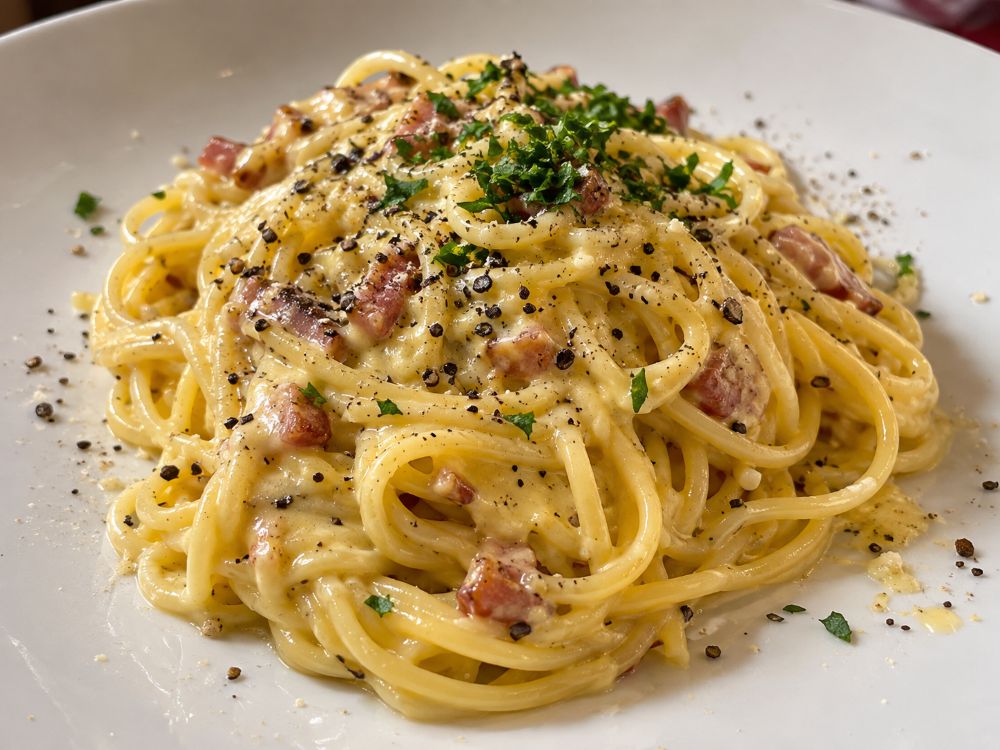
The Forsterbräu speciality board costs €14.50 for one person or €28.50 for two and provides a concise introduction to the South Tyrolean appetite.
There is Speck Alto Adige IGP, herb-cooked ham, Felino salami, coppa, Kaminwurzen, cheeses from Sesto and the Ortles area, pickles, horseradish, butter and boiled egg.
It is a serious amount of savoury food before the main courses have even begun.
The best elements are the simplest: fatty Speck against sharp horseradish, dry sausage beside mountain cheese, butter softening the salt. A pretzel alongside is tempting, but remember that the menu contains pork knuckle further down.
Speck Canederli in Broth Are South Tyrol in One Bowl
The Speck canederlo in broth costs €7.50 for one dumpling and €9.50 for two.
Few dishes explain South Tyrolean domestic cooking more efficiently.
Bread that might otherwise be wasted becomes the foundation, Speck brings smoke and salt, egg binds everything together and a clear broth turns the dumpling into something warming without making it oppressive.
The texture is crucial. A canederlo should be compact enough to survive in broth but never rubbery.
Fresh chives provide the final aromatic lift, and the whole thing feels particularly appropriate once Merano’s evenings begin to cool.
Schlutzkrapfen Bring the More Delicate Side of the Mountains
The Schlutzkrapfen cost €14.50 and arrive filled with spinach and ricotta, finished with Stelvio cheese and melted butter.
These half-moon pasta parcels are one of the softer expressions of Alpine cooking.
Spinach adds vegetal bitterness, ricotta keeps the filling mild and Stelvio cheese gives the plate a more assertive dairy edge. Melted butter ties everything together without requiring a complicated sauce.
After the Speck-heavy opening dishes, Schlutzkrapfen provide a welcome change of texture and tone.
Bauern Gröstl Is Built for Hunger
The Bauern Gröstl costs €19.80.
Roast potatoes are fried with strips of beef, onion and meat juices, then paired with Speck-marinated cabbage salad. It is exactly the sort of food that makes sense after skiing, hiking or simply convincing yourself that walking around Merano counts as substantial exercise.
The potatoes need browned edges; the beef brings depth; onion supplies sweetness; cabbage cuts through the entire arrangement.
Gröstl is not delicate, and trying to make it delicate would ruin it.
Its appeal lies in the pan: browned, savoury, hot and unapologetically substantial.
The FORST Plate Is the Table’s Main Event
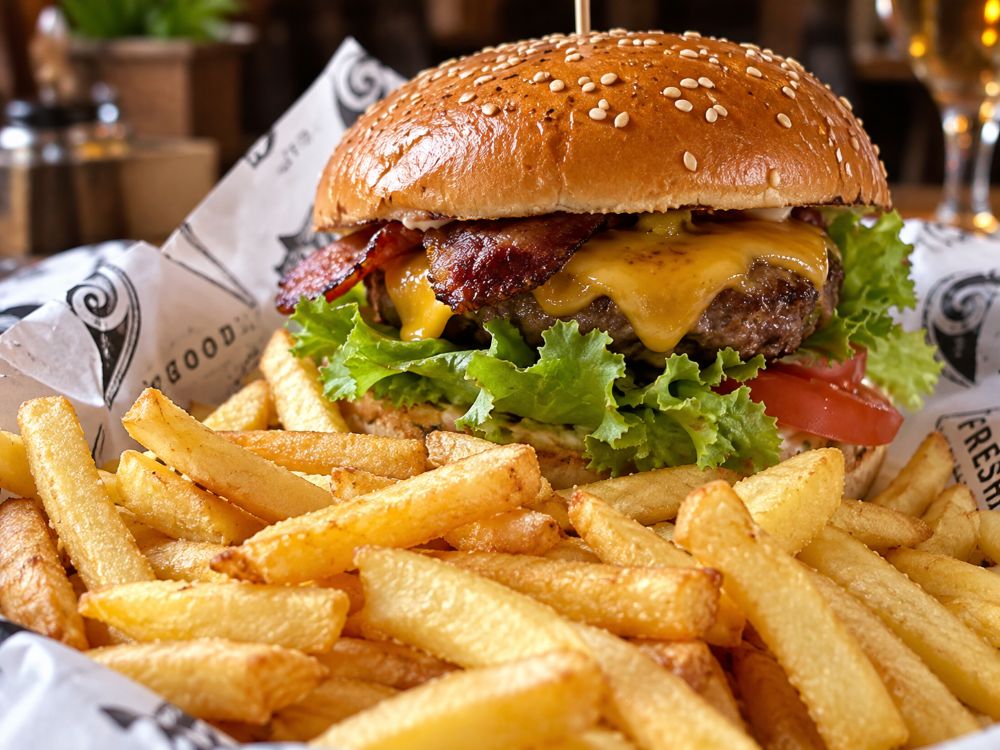
The Piatto FORST costs €21.30 and collects several beer-hall essentials on one plate: roast pork knuckle, pork ribs, grilled sausage, sauerkraut, Speck canederlo and horseradish.
This is not a dish for indecisive diners. It is a dish for diners who have decided they would like everything.
The pork knuckle brings gelatinous richness and roasted exterior; ribs add a sweeter, softer style of pork; sausage gives snap and spice; sauerkraut provides the acidity required to keep the plate moving.
Then there is the canederlo, ready to absorb whatever remains.
It is excessive in precisely the correct way.
If this is your first visit, the FORST plate is the most efficient introduction to what the restaurant does best.
The Pork Knuckle Deserves a Plate of Its Own
The oven-roasted pork knuckle costs €17.80, served with potato dippers, FORST mustard and horseradish.
Ordering it separately gives the meat more room to breathe than on the mixed plate.
Pork knuckle needs two completely different textures: crisp, deeply roasted skin outside and moist, yielding meat underneath. Horseradish cuts sharply through the fat, while mustard brings acidity and heat without needing sweetness.
This is beer food in its most elemental form.
No microgreens required.
Wiener Schnitzel Is the Cleaner Alternative
The veal Wiener Schnitzel costs €24.50 and comes with either roast potatoes or potato salad. Lingonberry jam is available alongside.
After several pork-based dishes, the schnitzel almost feels restrained.
The coating should remain crisp and slightly detached from the veal rather than clinging heavily to it. Potato salad offers the better contrast, especially when dressed with enough acidity.
Lingonberry works because tart fruit cuts through both frying and veal without turning the dish sweet.
It is also one of the most natural plates for anyone who wants the Central European atmosphere without committing to an entire pork knuckle.
Goulash Brings the Menu into Colder Territory
The local beef goulash costs €21.80, served with a Speck canederlo and marinated lettuce hearts.
This is the darker, slower side of the menu.
Goulash relies on patient cooking until the beef softens and the sauce acquires enough concentration to coat rather than flood the plate. The dumpling is there for obvious reasons: no respectable spoonful of sauce should be left behind.
It is a winter dish in spirit, rich but not as fatty as the knuckle or ribs.
Beer Pairings
Speck and cheese board: FORST V.I.P. Pils — dry, crisp and bitter enough for cured pork and mountain cheese.
Piatto FORST: FORST Kronen — fuller malt and enough body for knuckle, sausage and sauerkraut.
Beef goulash: FORST Sixtus — dark, malty and strong enough for slow-cooked beef.
FORST Is Not Background Music Here
Beer is half the reason this restaurant exists.
FORST V.I.P. Pils costs €2.80 for 0.2 litres and €5.20 for 0.4 litres. The Kronen Speciale is €4 for 0.3 litres and €6 for 0.5, while Felsenkeller costs €4.50 for 0.3 litres.
The range then becomes stronger and darker.
FORST Sixtus, a 6.5% dark double-malt beer, costs €2.90 for 0.2 litres and €6.20 for 0.5. Heller Bock, at 7.5%, is €4.10 for 0.3 litres and €6.20 for half a litre.
There is also FORST 0.0% at €4 for 0.33 litres, plus wheat beers for anyone inclined to wander beyond the brewery’s core styles.
The fun is in changing beer with the food rather than drinking one style from beginning to end.
Even the Sausage Section Has Its Own Logic
The grilled bratwurst with sauerkraut and mustard costs €13.80, while the Merano würstel with fries is €9.50.
A Bavarian-style Weisswurst with pretzel and sweet mustard costs €8.80.
None of this is complicated, but sausages behave differently enough to justify the choice. Bratwurst is firmer and better suited to sauerkraut; Weisswurst is softer, milder and happier beside wheat beer; the Merano version occupies the straightforward middle ground.
This is one part of the menu where simplicity becomes an advantage rather than a limitation.
Vegetarians Are Not Condemned to Salad
The creamy polenta with porcini costs €14.50, rising to €16.50 with porcini and Gorgonzola.
There is also the spinach-and-ricotta Schlutzkrapfen and a canederli trio over marinated cabbage with Stelvio cheese and melted butter at €14.20.
These dishes remain substantial enough to belong naturally in the same restaurant as pork knuckle and goulash.
Polenta with porcini and Gorgonzola is particularly robust: earth, blue cheese and soft cornmeal producing a combination that hardly feels like compromise.
The Courtyard Is Where the Beer-Hall Spirit Really Lands
Forsterbräu underwent its major transformation between 1952 and 1954, when the older building gave way to a new four-storey structure incorporating an internal courtyard.
That courtyard still matters.
In warm weather it loosens the atmosphere considerably, turning a very large restaurant into something closer to a central European beer garden hidden inside Merano.
Inside, the tone becomes more overtly Tyrolean, with a busy, convivial rhythm rather than intimate restaurant silence.
This is not where you whisper over dinner.
Service, Atmosphere and Prices
Forsterbräu is built to move a lot of food and beer through a lot of tables, and its extended hours are part of the appeal.
The restaurant opens daily from 11:00 am until 1:00 am. The kitchen serves continuously from 11:30 am to 10:30 pm Sunday through Thursday and until 11:00 pm on Friday and Saturday.
Pricing remains moderate considering the central Merano location and substantial portions. A Speck canederlo in broth (€7.50), pork knuckle (€17.80) and 0.5-litre Kronen (€6) total €31.30 before the €1.50 cover charge.
The more excessive route is barely more expensive: Piatto FORST (€21.30) plus a half-litre Kronen (€6) gives you enough pork and beer to make further strategic planning irrelevant.
Useful Information
- Address: Corso della Libertà 90, 39012 Merano, South Tyrol
- History: Forsterbräu Meran dates to 1869
- Management: Helmuth Geier since 2009
- Cuisine: South Tyrolean and Tyrolean beer-hall cooking
- Seats: Approximately 400
- Speciality board: €14.50; €28.50 for two
- Speck canederlo in broth: €7.50 for one; €9.50 for two
- Schlutzkrapfen: €14.50
- Bauern Gröstl: €19.80
- Piatto FORST: €21.30
- Pork knuckle: €17.80
- Veal Wiener Schnitzel: €24.50
- Beef goulash: €21.80
- Grilled bratwurst: €13.80
- Merano würstel: €9.50
- Cover charge: €1.50
- Restaurant: Daily, 11:00 am–1:00 am
- Kitchen Sunday–Thursday: 11:30 am–10:30 pm
- Kitchen Friday–Saturday: 11:30 am–11:00 pm
- Telephone: +39 0473 236535
- Email: [email protected]
- Best for: South Tyrolean food, pork knuckle, canederli and FORST beer in central Merano
Our Rating of Forsterbräu Meran
Food: 8.9/10
South Tyrolean classics are the reason to come, especially when pork, dumplings and sauerkraut dominate the table.
Traditional Cooking: 9.2/10
Canederli, Schlutzkrapfen, Gröstl and goulash give the menu a strong regional backbone.
Pork: 9.2/10
Knuckle, ribs and sausages are completely at home in this beer-hall setting.
Vegetarian Cooking: 8.6/10
Polenta, mushrooms, cheese and filled pasta provide genuinely substantial alternatives.
Beer: 9.5/10
The FORST range is not accompaniment but a central part of the experience.
Service: 8.8/10
Designed for a large, constantly moving dining room rather than slow formal choreography.
Atmosphere: 9.3/10
Central courtyard, Tyrolean character and the sheer movement of a historic beer hall create a distinctly Merano experience.
Value for Money: 9/10
Most substantial regional mains remain around €18–€22, with beer prices still sensible for the city centre.
Overall Rating: 9.1/10

