
Le Masiere Aviano: Serious Steak, Friulian Products and a Cellar Built for Meat

Le Masiere sits on the Pedemontana Occidentale outside Aviano, where the plain begins to fold towards the mountains and restaurants naturally acquire a different appetite. This is meat country, and Le Masiere makes no attempt to disguise the fact.
The restaurant specialises in selected beef, grilled cuts and substantial seasonal cooking, sourcing unusual breeds and working with smaller producers rather than reducing the grill to a list of anonymous steaks. Friulian ingredients provide the regional backbone: Pitina, mountain cheeses, frico and products from the valleys around Pordenone share space with large cuts of beef, lamb and more contemporary preparations.
The setting reinforces that identity. A large green park surrounds the restaurant, with the mountains forming the backdrop rather than a decorative photograph on the wall. Inside, the dining room is polished but relaxed enough for a long meat-driven dinner.
On our 2026 visit, the strongest route through the menu was also the most obvious: begin with Friuli, then move towards the grill.
Pitina Is the Right Way to Start in This Part of Friuli
Before the steaks arrive, the territory deserves some attention.
Pitina is one of the most distinctive foods of the Pordenone valleys, traditionally made from minced meat shaped into a ball, coated in cornmeal and smoked. Historically it offered mountain communities a way of preserving meat when conditions made conventional salumi difficult to produce.
Its flavour is deeper and smokier than ordinary cured pork, with a texture that immediately separates it from sliced salami.
At Le Masiere, products like Pitina make far more sense than an oversized generic antipasto. They establish where you are before the menu begins travelling towards Irish and Catalan beef.
Mountain Cheese Brings Another Side of the Pedemontana
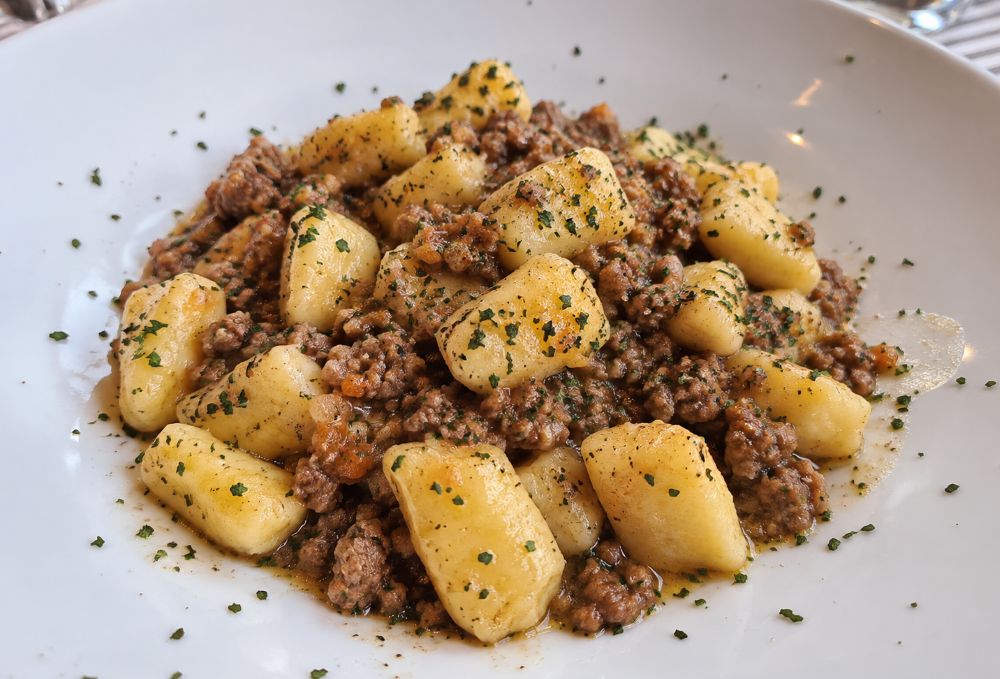
Aged cheeses from the surrounding valleys provide the natural companion.
The more mature examples have the density and nutty concentration required to stand beside smoked meat, while younger mountain cheeses retain enough lactic sweetness to keep the opening courses from becoming excessively salty.
This part of Friuli has a long dairy tradition, and the restaurant’s proximity to the Valcellina, Val Tramontina and Val d’Arzino makes cheese feel integral rather than ornamental.
A small selection is enough. The grill is still coming.
Frico and Polenta Need No Modernisation
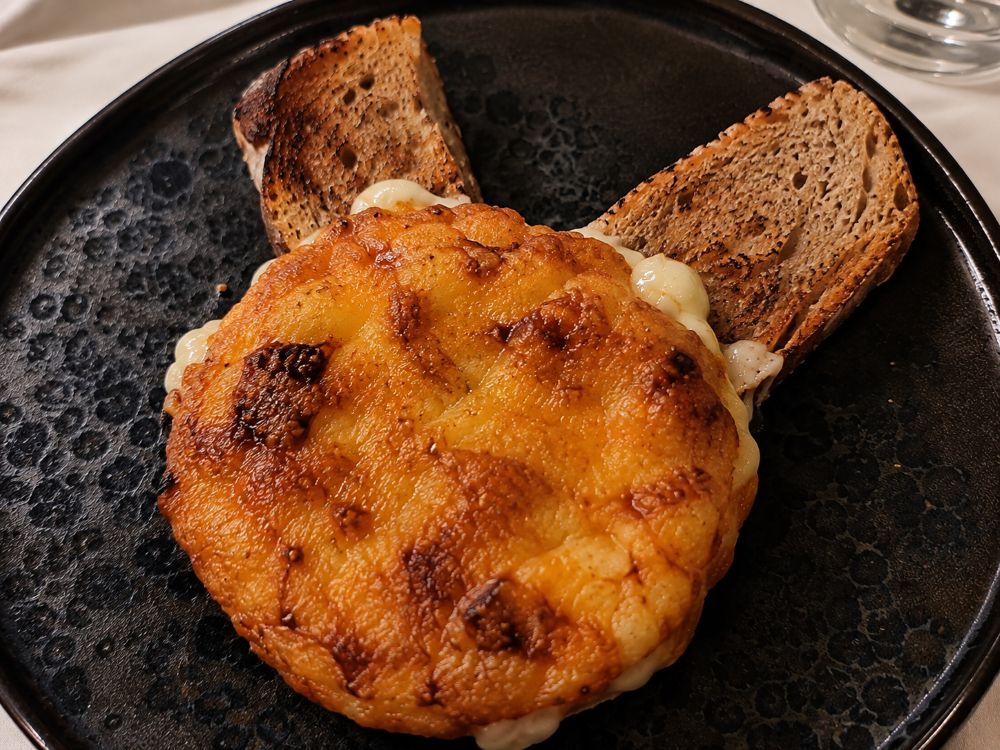
The frico with polenta belongs to the most recognisable side of Friulian comfort food.
Cheese is cooked until melted and deeply browned, developing crisp edges and a rich interior. Polenta absorbs the fat and salt while softening the intensity of the cheese.
There is very little room here for culinary reinvention, which is fortunate.
Frico succeeds because of heat, dairy quality and texture. The moment it receives unnecessary sauces or elaborate garnishes, its directness disappears.
At Le Masiere, it also provides a regional counterpoint to the restaurant’s more international selection of beef.
The Catalan Heifer Is Built for the Grill
One of the restaurant’s distinctive meats is Catalan heifer, raised extensively and fed on vegetation for more than four years.
Age matters.
Older cattle generally develop more complex flavour and firmer fat than very young animals, while good marbling protects the meat during intense cooking. In this case, the emphasis is firmly on mature beef with enough fat to create a substantial crust and a juicy centre.
A thick costata is the obvious preparation.
The grill needs to work aggressively at the beginning, building caramelisation on the exterior before the meat rests and the heat moves gradually inward.
This is not beef that needs sauce.
Irish Heifer Offers a Different Kind of Richness
The Irish heifer moves in another direction.
Ireland’s humid climate and long grazing season naturally favour grass-fed cattle, producing beef with a distinctive mineral character and pronounced fat.
Compared with the Catalan meat, Irish beef often feels slightly cleaner and more herbaceous, with a flavour that remains evident even in simpler cuts.
Again, the best treatment is uncomplicated.
Grill it, rest it properly and let the meat explain itself.
Bavetta Is the Cut for People Who Prefer Flavour to Prestige
The bavetta is particularly interesting because it does not rely on luxury reputation.
This long-fibred cut has considerably more character than fillet, but it demands accurate cooking and, above all, correct slicing. Cutting against the grain shortens the fibres and transforms a potentially chewy steak into something much more tender.
It should remain pink inside.
Bavetta is also one of the best examples of why a serious meat restaurant should not revolve solely around ribeye, fillet and Fiorentina. Less obvious cuts often carry more personality.
Entrecôte Is the More Familiar Reference Point
The grilled entrecôte provides the straightforward comparison.
Its marbling makes it naturally forgiving on the grill, with enough intramuscular fat to remain juicy even under substantial heat.
The pleasure is immediate: browned exterior, yielding centre, rendered fat.
Among several diners, ordering one entrecôte and one less conventional cut such as bavetta makes considerably more sense than duplicating the same steak across the table.
Lamb Chops Bring a Different Kind of Sweetness
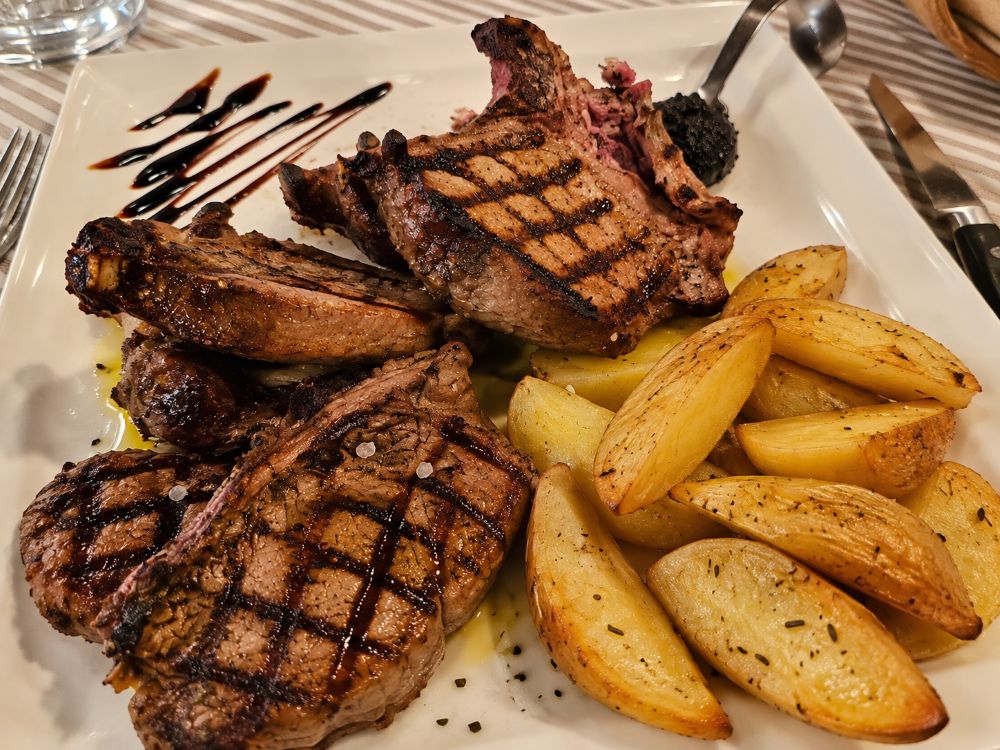
The grilled lamb chops with roast potatoes and vegetables move away from beef without abandoning the fire.
Lamb fat has a sweeter, more distinctive aroma, and chops require little more than a fierce grill, salt and careful timing. The centre should remain pink while the exterior develops the caramelisation that makes the fat worth eating.
Roast potatoes are exactly the accompaniment required.
Anything more elaborate would simply compete with the meat.
Wine Pairings
Frico and polenta: Borgo delle Oche Friulano DOC Friuli — fresh and dry against melted cheese.
Lamb chops: La Tunella Arcione — Pignolo and Schioppettino bring spice and structure to grilled lamb.
Costata: Livio Felluga Refosco dal Peduncolo Rosso — dark fruit, freshness and firm character for mature beef.
Seasonality Keeps the Kitchen from Becoming a Steak Catalogue
Le Masiere is clearly centred on meat, but it is not simply a grill house.
The kitchen also works with seasonal menus and monthly themed dinners, allowing vegetables, game and regional products to enter and leave according to the time of year.
That matters because even an excellent piece of beef becomes monotonous when surrounded by a menu that repeats the same formula twelve months a year.
The Pedemontana offers mushrooms, herbs, cheeses, game and preserved products capable of changing the rhythm of the meal without weakening the restaurant’s identity.
The Cellar Has Real Breadth
Wine receives serious attention, with Friuli forming the natural starting point before the selection moves through the rest of Italy and beyond.
Producers include La Tunella, Livio Felluga, Borgo delle Oche, Russiz, Jacuss, Castelvecchio, Monviert and Bulfon, alongside estates from Piedmont, Trentino-Alto Adige, Tuscany and other regions. Champagne is represented as well.
That range suits a meat restaurant because beef alone can move from relatively lean bavetta to heavily marbled costata, each asking for something different from the bottle.
Regional reds remain the most interesting place to begin.
Refosco, Schioppettino and blends involving Pignolo have enough structure for meat while retaining the freshness that prevents a long dinner from becoming exhausting.
Dessert Should Not Compete with the Grill
After mature beef, frico and red wine, dessert needs restraint.
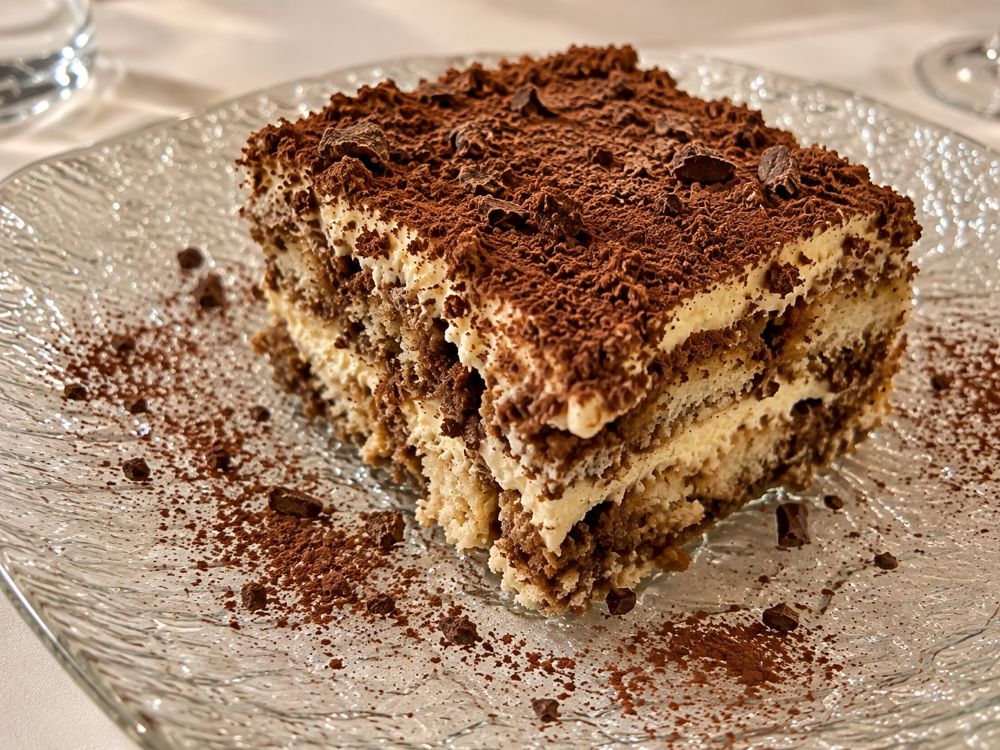
A classic tiramisù or a simple cream-based dessert makes more sense than an elaborate pastry construction. Coffee bitterness is particularly welcome after fatty meat, while mascarpone provides softness without introducing another aggressive flavour.
The final course should lower the volume.
The meat has already had the last word.
The Park Changes the Experience
Le Masiere benefits enormously from its setting.
The restaurant sits in a large green space beneath the mountain foothills, creating considerably more breathing room than a conventional dining room in Aviano or Pordenone.
In warmer weather, the exterior becomes part of the evening rather than merely an overflow area. During colder months, the substantial indoor room suits the more robust side of the menu equally well.
This is a restaurant designed as much for long dinners and celebrations as for two people sharing a steak.
Service and Atmosphere
The service style reflects the restaurant’s broader ambitions.
The presence of a sommelier and a substantial cellar gives wine more attention than at a basic grill, while the room remains relaxed enough that choosing a large rib steak does not become a ceremonial exercise.
The restaurant handles intimate dinners, family lunches and larger occasions without changing its essential character.
Monday is dedicated to dinner, Tuesday is the weekly closing day, while Wednesday through Sunday include both lunch and dinner.
Useful Information
- Address: Via Pedemontana Occidentale 18, 33081 Aviano, Pordenone
- Cuisine: Meat-focused Italian and Friulian cooking
- Setting: Large park at the foot of the mountains
- Signature focus: Selected beef, grilled meat and regional products
- Beef: Catalan heifer and Irish heifer among the principal selections
- Cuts to look for: Costata, entrecôte, bavetta and tagliata
- Regional specialities: Pitina, mountain cheeses, frico and polenta
- Wine: Extensive cellar with Friulian, Italian and international producers
- Monday: Dinner only
- Tuesday: Closed
- Wednesday–Sunday: Lunch and dinner
- Telephone: +39 0434 661418
- Mobile: +39 376 1660599
- Email: [email protected]
- Parking: Available
- Outdoor space: Large garden
- Best for: Grilled beef, Friulian products, wine and leisurely dinners near Aviano
Our Rating of Le Masiere
Food: 9/10
The kitchen is strongest when regional products lead naturally into serious grilled meat.
Starters: 8.9/10
Pitina, cheeses and traditional Friulian flavours establish the territory without exhausting the appetite.
Traditional Friulian Cooking: 9/10
Frico, polenta and products from the surrounding valleys give the restaurant a convincing local foundation.
Beef: 9.4/10
Mature cattle, distinctive breeds and less obvious cuts make this the clear centre of the restaurant.
Grill: 9.3/10
Costata, entrecôte and bavetta reward direct cooking rather than unnecessary embellishment.
Lamb: 9/10
A strong alternative to beef, especially when the grill keeps the centre pink and the fat properly browned.
Wine List: 9.3/10
Friuli is well represented without turning the cellar into a purely regional exercise.
Service: 9/10
Professional enough for serious wine and large cuts, but relaxed enough for an unforced dinner.
Atmosphere: 9.2/10
The green foothill setting gives the restaurant space and character beyond the dining room itself.
Value for Money: 8.8/10
The emphasis is on selected meat and a substantial cellar rather than inexpensive trattoria dining.
Overall Rating: 9.1/10

