
Prik Thai Cervia Review: Pad Thai, Curry and Spicy Thai Cooking in the Historic Centre

Cervia is a town naturally associated with Adriatic fish, piadina and the cooking of Romagna, which makes Prik Thai an unusually lively detour. The restaurant sits in Piazza Andrea Costa, in the historic centre, and concentrates entirely on Thai cuisine: noodles, rice, curries, spicy soups and vegetarian dishes built around the contrasts that define much of Thailand’s cooking.
Those contrasts matter. Thai food becomes far less interesting when reduced simply to chilli. The real tension comes from sweetness, acidity, salinity, herbs, toasted nuts, coconut and heat, often appearing in the same mouthful. Prik Thai is at its most convincing when those forces remain clearly separated rather than merging into a generic sweet-spicy sauce.
On our 2026 visit, the restaurant felt refreshingly different from the seafood-heavy rhythm of the Riviera. This is casual cooking, colourful and aromatic, with dishes designed for sharing and enough variation to build dinner around several different levels of spice.
Pad Thai Is the Natural Place to Begin
Pad Thai is the obvious reference point, but that does not make it the boring choice.
Rice noodles form the base, but a proper Pad Thai depends on everything surrounding them: acidity, sweetness, egg, toasted peanuts and enough savoury seasoning to give the noodles depth without making them heavy.
The texture is crucial.
The noodles should remain elastic and separate rather than softening into a sticky mass. Peanuts supply crunch, while lime gives the diner control over the final balance.
It is one of Thailand’s most internationally familiar dishes because it manages to be immediately comforting without being one-dimensional.
At Prik Thai, it is also a useful introduction before moving towards the hotter and more aromatic parts of the menu.
Curry Is Where Coconut and Spice Start Negotiating
Thai curry behaves very differently from a European stew.
Coconut milk provides richness, but the dish should never taste merely creamy. Curry paste brings chilli, aromatics and spice; vegetables and protein add substance; herbs and citrus notes give the sauce lift.
The best mouthfuls alternate between softness and heat.
That makes rice essential rather than optional. It absorbs the sauce and moderates the more intense flavours, particularly when chilli begins to accumulate over the course of the bowl.
Prik Thai offers several aromatic curry preparations, and this is the section to explore if you want something more layered than a straightforward noodle dish.
Thai Soups Are Built on Fragrance Before Weight
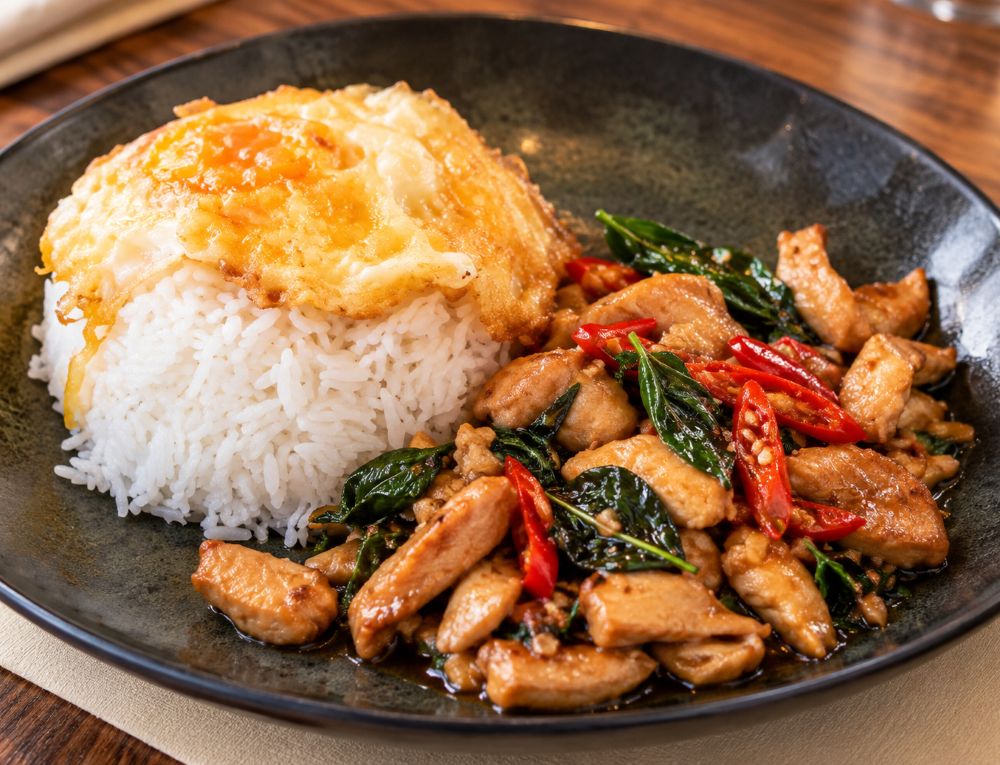
The soup section introduces another side of the cuisine.
Thai soups often begin with perfume: citrus, herbs, spice and chilli reaching the nose before the spoon has even arrived. Some are sharper and more saline; others use coconut milk to soften the heat and create a rounder texture.
This interplay is one of the pleasures of Thai cooking.
A soup can feel light and intense simultaneously, because richness comes from aroma and seasoning rather than simply from fat.
For a first dinner, sharing one soup before noodles or curry gives the meal considerably more range.
Rice Dishes Are the Quiet Counterpoint
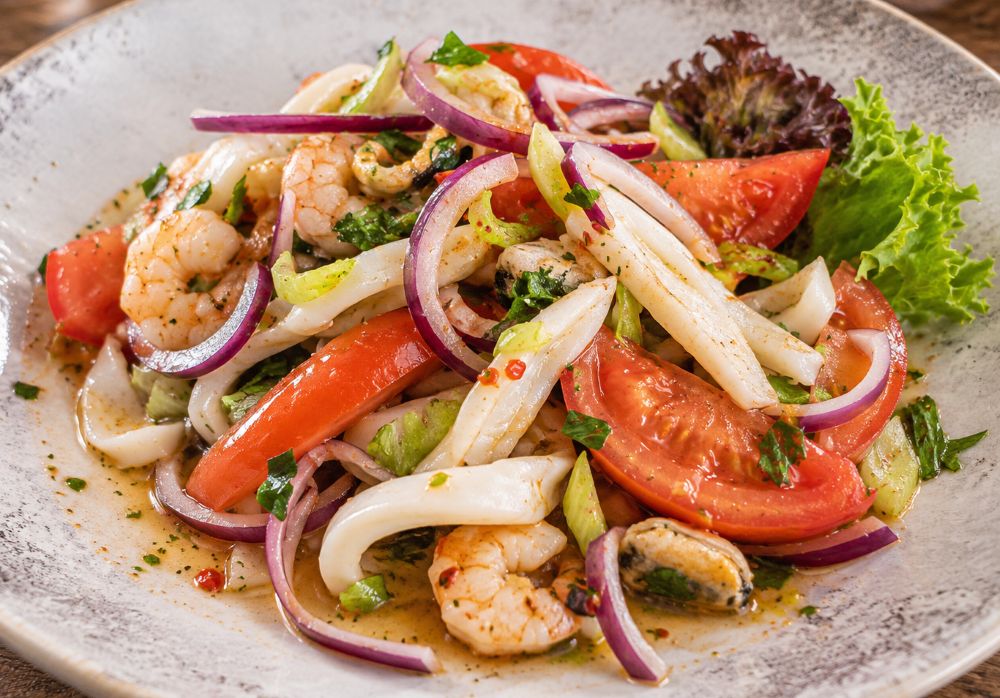
After chilli and coconut, a plate based around Thai-style rice can sound almost modest.
That is precisely its value.
Rice acts as both ingredient and regulator. Stir-fried versions can carry vegetables, egg and meat or seafood while retaining a drier, more direct character than curry.
They also make sense for diners who want Thai flavours without pushing every course towards maximum heat.
A mixed table benefits from having one rice dish in the centre. It absorbs sauces, cools the palate and gives more aggressive dishes somewhere to land.
Noodles Beyond Pad Thai Are Worth Exploring
Pad Thai dominates the international image of Thai noodles, but the category is much broader.
Stir-fried noodles can move towards soy, vegetables, chilli or more savoury sauces, giving the kitchen considerable freedom over texture and intensity.
This is where a wok matters.
High heat should leave vegetables lively and noodles coated rather than boiled into softness. A little caramelisation adds depth, while herbs and chilli keep the finish fresh.
Ordering Pad Thai alongside a second noodle preparation is a good way to see how dramatically similar ingredients can change once the seasoning shifts.
Vegetarian Thai Cooking Does Not Need to Feel Secondary
Thai cuisine adapts naturally to vegetarian cooking because so much of its character comes from herbs, chilli, coconut, vegetables, lime, peanuts and rice rather than from meat alone.
Prik Thai includes vegetarian options across the menu, making it possible to build a meal without reducing the experience to one token vegetable curry.
Tofu also makes sense in this context. Its mild flavour allows it to absorb curry paste and sauce, while frying can create the crisp exterior needed to stop the texture becoming monotonous.
Vegetarian dishes are particularly useful for sharing alongside richer meat or seafood preparations, introducing a cleaner break between them.
Heat Should Not Become a Competition
The restaurant’s name itself contains an important clue: prik is the Thai word for chilli.
But chilli should never become a macho test of endurance.
Thai cooking uses heat as one component among several. Lime, sugar, herbs, fermented sauces and coconut all modify the perception of spice.
When a dish becomes aggressively hot, the best response is not necessarily another beer. Rice and coconut-based preparations are considerably more effective at restoring balance.
For diners less accustomed to chilli, it is better to mix a hotter dish with milder noodles or rice rather than ordering an entire table at the same intensity.
Drink Pairings
Pad Thai: Singha Lager — crisp carbonation and restrained bitterness suit lime, peanuts and sweet-savoury noodles.
Coconut curry: Gewürztraminer from Alto Adige — aromatic fruit and gentle sweetness soften chilli without disappearing beneath the spices.
Spicy stir-fried noodles: Riesling Kabinett — bright acidity and a touch of residual sugar bring useful relief from heat.
Beer Is Often More Natural Than Red Wine
Thai food can make conventional wine pairing unnecessarily difficult.
Chilli exaggerates alcohol and tannin, while sweetness and acidity can make heavy reds feel clumsy. Beer therefore has an immediate advantage.
A pale lager such as Singha or Chang brings carbonation, cold temperature and enough bitterness to refresh the palate without competing with the food.
Wine becomes more interesting when it stays aromatic and relatively low in alcohol.
Riesling is particularly effective, while Gewürztraminer can handle coconut, lemongrass-like aromatics and spice. Very dry, austere whites are less forgiving when chilli becomes prominent.
Dessert Needs Cooling More Than Complexity
After a meal built around spice, the ideal dessert changes.
Rich chocolate or dense pastry can feel cumbersome, while coconut, fruit and softer textures make a more natural transition.
Thai desserts frequently exploit that contrast between sweetness and freshness, often using coconut as both flavour and cooling element.
Whatever appears at the end of the meal, restraint is useful. After curry and chilli, dessert should lower the volume rather than start another argument.
A Different Kind of Dinner in Central Cervia
Prik Thai occupies an interesting position in Cervia.
The surrounding gastronomic landscape is dominated by Romagna and the Adriatic, so a dedicated Thai restaurant immediately offers something genuinely different rather than another variation on the same coastal menu.
The location in Piazza Andrea Costa keeps it central enough for dinner after walking through the old town, yet the flavours move quickly and convincingly away from Emilia-Romagna.
The room is informal and contemporary rather than ceremonial. That suits the food: Thai cooking is best when several plates arrive together and diners move freely between noodles, rice, curry and soup.
Service, Atmosphere and Prices
The restaurant is compact and casual, with a style better suited to shared dishes and an animated dinner than to formal service.
Useful Information
- Address: Piazza Andrea Costa 34, 48015 Cervia, Ravenna
- Cuisine: Thai
- Specialities: Pad Thai, aromatic curries, spicy soups, rice and noodle dishes
- Vegetarian options: Available
- Monday: 7:00 pm–10:00 pm
- Tuesday: 7:00 pm–10:00 pm
- Wednesday: Closed
- Thursday–Sunday: 12:00 pm–3:00 pm and 7:00 pm–10:00 pm
- Telephone: +39 334 7477054
- Email: [email protected]
- Location: Central Cervia, in Piazza Andrea Costa
- Best for: Pad Thai, curry, spicy food and a change from traditional Romagna seafood
Our Rating of Prik Thai
Food: 8.8/10
A focused Thai menu brings a welcome change of rhythm to central Cervia.
Noodles: 9/10
Pad Thai provides the natural reference point, while wok cooking gives the category broader range.
Curries: 8.9/10
Coconut, spice and aromatic ingredients create the richest part of the menu.
Soups: 8.8/10
Fragrance and acidity offer a useful counterpoint to the heavier dishes.
Vegetarian Cooking: 8.8/10
Thai flavours allow vegetables and tofu to stand on their own rather than imitate meat-based plates.
Spice Balance: 9/10
The best dishes treat chilli as part of a larger flavour structure rather than an endurance exercise.
Drinks Pairing Potential: 8.6/10
Thai lager and aromatic whites are the most natural companions.
Service: 8.7/10
Casual and appropriate for a restaurant built around sharing and quick-moving dishes.
Atmosphere: 8.6/10
Compact, colourful and well placed for an informal dinner in central Cervia.
Value for Money: 8.8/10
The casual format makes it an accessible alternative to the more elaborate restaurants of the Riviera.
Overall Rating: 8.8/10

