
Where to Eat Traditional Food in Alba: Tajarin, Vitello Tonnato and Langhe Wine at Osteria dell’Arco

Osteria dell’Arco has been part of Alba’s restaurant landscape since 1986, when the Cooperativa I Tarocchi opened it after launching the celebrated Boccondivino in Bra two years earlier. The connection with the early Slow Food movement remains fundamental to its identity: local ingredients, seasonal menus, Piedmontese recipes and an unusually serious relationship with the wines of Langhe and Roero.
The restaurant sits slightly hidden inside Piazza Michele Ferrero, away from the most obvious tourist flow. In summer, tables spread into the internal courtyard; inside, the dining room is sober, warm and considerably more polished than the word osteria might suggest.
On our 2026 visit, the menu showed precisely why Osteria dell’Arco has lasted. This is not a museum of Piedmontese food. Vitello tonnato, carne cruda, tajarin and plin remain important, but they sit beside seasonal vegetables, duck, seafood and lighter contemporary combinations. The traditional dishes provide the strongest reason to come, while the enormous regional wine selection turns a relatively informal dinner into something considerably more ambitious.
Tradition Comes in Three Bites
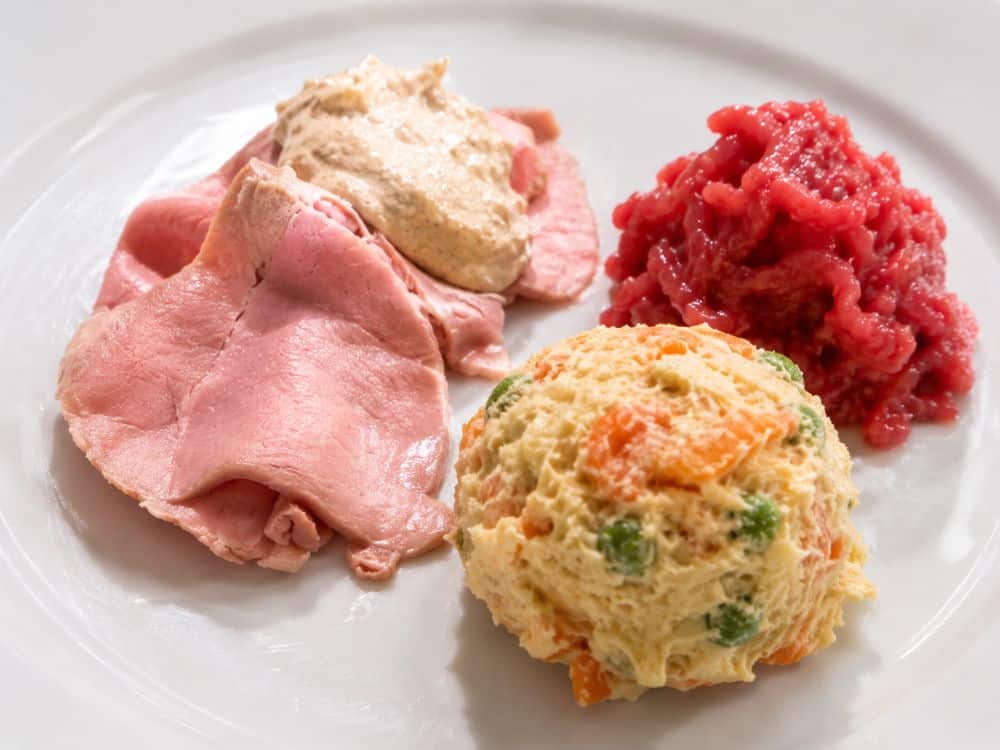
The smartest first order is simply called La Tradizione, priced at €16.
It brings together insalata russa, carne cruda battuta al coltello and vitello tonnato, three dishes that explain an extraordinary amount about Piedmontese cooking without requiring an encyclopaedic starter selection.
The carne cruda is particularly revealing. Good Fassona needs very little intervention: careful knife work, olive oil and measured seasoning allow the lean but unusually tender meat to remain recognisable.
The vitello tonnato moves in the opposite direction, pairing delicate veal with a deeply savoury tuna-based sauce. The sauce needs acidity and anchovy depth, but it should never become so thick that the meat disappears underneath it.
Finally, insalata russa brings potato, vegetables and mayonnaise into a preparation that seems humble but has become inseparable from traditional Piedmontese antipasti.
Together, the three make far more sense than ordering several elaborate starters before pasta.
Peperone di Carmagnola Keeps Another Piedmontese Classic Alive
The Carmagnola square pepper in agrodolce with tuna, anchovies and capers, at €12, deserves attention if you want a second starter.
Carmagnola peppers have exceptional fleshiness and sweetness. Here that natural sweetness is sharpened by vinegar, while tuna, anchovies and capers introduce the saline depth familiar from many Piedmontese vegetable preparations.
It is a clever dish to order alongside La Tradizione because the acidity and vegetable sweetness break up the richer meat and mayonnaise-based flavours.
More importantly, it shows the restaurant’s relationship with regional ingredients rather than merely with famous regional recipes.
The 40-Yolk Tajarin Are the Pasta to Order First
The tajarin “40 tuorli” are the clearest reason to book Osteria dell’Arco.
Tajarin are among the defining pastas of the Langhe, exceptionally thin ribbons traditionally made with an unusually high proportion of egg yolks. That gives the dough its intense golden colour, supple texture and richness.
The current seasonal version pairs them with trombette mushrooms and basil pesto, moving away from the more familiar ragù while preserving the pasta itself as the centre of the dish.
The noodles need only a brief cooking time. Their quality lies in the contrast between extraordinary fineness and enough resistance to remain distinct after dressing.
During truffle season, this is also exactly the kind of pasta that should be ordered with Alba white truffle when available. Butter, egg pasta and truffle need very little else.
Agnolotti del Plin Remain Essential
Even when the seasonal menu moves around them, agnolotti del plin remain part of the restaurant’s Piedmontese vocabulary.
The tiny filled parcels take their name from the plin, the pinch used to close the dough around the filling. Traditional fillings generally draw on roasted or braised meats, vegetables and cooking juices, creating something considerably more concentrated than an ordinary raviolo.
Butter and sage provide the cleanest dressing. A reduced roast sauce produces the deeper alternative.
If two people are eating together, the sensible approach is to order one plate of tajarin and one of plin and divide both. Ordering two egg-rich first courses individually before meat can make an otherwise elegant meal unnecessarily heavy.
Brasato and Veal Cheek Show the Slow-Cooked Side of the Langhe
Osteria dell’Arco has long given serious attention to braised meat, particularly brasato al Barolo and slow-cooked veal cheek in red wine.
This is the deeper side of Piedmontese cooking. Cuts rich in collagen are cooked slowly until the connective tissue softens and the wine, vegetables and meat juices reduce into a concentrated sauce.
Barolo naturally gives the dish its prestige, but technique matters more than the name printed on the bottle. The finished meat should be tender without becoming fibrous, and the sauce should taste of reduction rather than flour or sweetness.
After a rich plate of tajarin, share the meat rather than treating a full sequence of antipasto, pasta and brasato as compulsory.
Rabbit Is the Lighter Regional Alternative
Rabbit, another recurring dish in the restaurant’s traditional repertoire, provides a more delicate alternative to braised beef.
The meat is lean and needs careful cooking to retain moisture. Piedmontese versions often bring wine, aromatic herbs or seasonal vegetables into the preparation rather than heavy sauces.
It is particularly useful for anyone wanting to complete a traditional meal without following egg-rich pasta with another intensely gelatinous beef dish.
Wine Pairings
Vitello tonnato: Ceretto Langhe Arneis Blangé — fresh, floral and clean against the tuna sauce.
Tajarin: Cascina Fontana Barbera d’Alba 2023 — bright acidity and restrained fruit suit egg pasta beautifully.
Brasato: Cavallotto Barolo Bricco Boschis — structured Nebbiolo with the depth required by slow-cooked beef.
A Wine List That Deserves Time
The cellar is one of the genuine strengths of Osteria dell’Arco.
The current list moves from inexpensive local bottles into serious Barolo territory without abandoning smaller producers. Barbera d’Alba alone includes wines from Brandini, Ceretto, Roberto Voerzio, Vietti, Domenico Clerico, Cascina Fontana, G.D. Vajra, Cordero di Montezemolo and numerous others.
Prices remain surprisingly sensible at the entry level. Current Barberas begin around €16–€20, with many strong producers between €20 and €30. At the other extreme, mature and single-vineyard Barolo can reach several hundred euros.
This breadth matters. You can drink a properly local bottle without doubling the cost of dinner, or use the restaurant as an opportunity to explore one of the great Langhe estates.
Semifreddo alla Nocciola Is the Most Natural Finish

The hazelnut semifreddo, at €7, is the dessert that makes the most sense after a Piedmontese meal.
The Langhe are one of Italy’s great hazelnut territories, and the best local nuts combine remarkable sweetness with roasted depth. A semifreddo preserves that aroma while keeping the texture lighter than a cake or chocolate tart.
The restaurant also offers its own tiramisù, panna cotta, salted-caramel gelato and a dark-chocolate cremino with cherries.
For a more explicitly regional finish, however, hazelnut remains the first choice.
Service, Atmosphere and Prices
Osteria dell’Arco manages to feel established without becoming ceremonial. The staff are young, efficient and particularly useful when navigating the wine list, which can easily become the most complicated part of dinner.
The restaurant is open for lunch from 12:00 pm to 2:30 pm and dinner from 7:00 pm to 10:00 pm, and is normally closed on Thursday and Sunday. October and November, when Alba enters the intense period surrounding the White Truffle Fair, may operate differently.
The summer courtyard is the most attractive place to sit during warm weather, while the internal room has enough polish for a more serious dinner.
Prices remain controlled for central Alba. La Tradizione costs €16, most starters sit between €12 and €16, desserts cost €5–€7 and many excellent local wines remain around €20–€30 a bottle.
A realistic dinner with a shared traditional starter, one first course each, dessert and a modest local bottle generally lands around €45–€55 per person. Adding a main course or moving into important Barolo pushes the total higher.
The combination of food quality, central location and wine pricing remains one of Osteria dell’Arco’s strongest arguments.
Useful Information
- Address: Piazza Michele Ferrero 5, 12051 Alba, Cuneo
- Established: 1986
- Cuisine: Traditional and contemporary Piedmontese cooking
- Philosophy: Strong historical connection with Slow Food and regional producers
- Dishes to look for: Carne cruda, vitello tonnato, insalata russa, 40-yolk tajarin, agnolotti del plin and braised meat
- La Tradizione starter: €16
- Carmagnola pepper: €12
- Desserts: €5–€7
- Wine list: Extensive Langhe and Roero selection, from inexpensive Barbera to important Barolo
- Opening hours: 12:00 pm–2:30 pm and 7:00 pm–10:00 pm
- Closed: Thursday and Sunday, with seasonal variations during October and November
- Telephone: +39 0173 363974
- Email: [email protected]
- Reservations: Strongly recommended
- Outdoor seating: Seasonal courtyard
- Best for: Piedmontese classics, Langhe wines and a traditional meal in central Alba
Our Rating of Osteria dell’Arco
Food: 9/10
Piedmontese foundations remain clear, but seasonal dishes prevent the menu from becoming static.
Starters: 9.2/10
La Tradizione condenses three essential local preparations into an unusually coherent opening.
Fresh Pasta: 9.3/10
The 40-yolk tajarin and plin provide the strongest expression of the kitchen.
Main Courses: 8.9/10
Braised meat and rabbit preserve the deeper side of Langhe cooking.
Desserts: 8.7/10
Hazelnut provides the most convincing regional conclusion.
Wine List: 9.6/10
Exceptional depth in Langhe and Roero, with both famous estates and less obvious producers represented at sensible mark-ups.
Service: 9/10
Efficient, informed and particularly valuable when choosing wine.
Atmosphere: 9/10
The hidden courtyard and restrained dining room offer a welcome contrast to Alba’s busier tourist streets.
Value for Money: 9.2/10
Traditional cooking, strong ingredients and remarkably accessible wine prices make the restaurant particularly competitive for central Alba.
Overall Rating: 9.1/10

