Directions

Babgulyás represents one of the most substantial evolutions of the famous Hungarian gulyás. While classic goulash originated as a soup cooked by Magyar herdsmen in cauldrons suspended over an open fire, Babgulyás appeared later, between the 18th and 19th centuries, when dried beans became a permanent element of the rural diet across Central Europe.
The Hungarian term is extremely clear: bab means bean, while gulyás refers to the cattle herder. It was a dish designed to sustain long working days on the vast plains of the puszta, where complete, caloric meals prepared in a single pot were essential.
Unlike many versions of goulash popular outside Hungary, authentic Babgulyás is a deep, brothy soup, not a dry stew. Its balance revolves around Hungarian paprika, a defining ingredient that became central to local cuisine between the 17th and 18th centuries after chili peppers arrived from the Americas.
Ingredients for 6 people
- 600 g beef shoulder or stewing beef
- 250 g dried beans
- 1 large onion
- 2 carrots
- 1 parsley root or 1 celery stalk
- 400 g potatoes
- 2 cloves garlic
- 2 tablespoons lard or seed oil
- 2 tablespoons Hungarian sweet paprika
- 1 teaspoon smoked paprika
- 1 teaspoon cumin
- 1 green pepper
- 2 ripe tomatoes or 200 g peeled tomatoes
- 1 bay leaf
- 1.5 liters meat broth
- Salt
- Pepper
Preparation time
Soaking beans: 10 hours
Preparation: 25 minutes
Cooking: 2 hours
Total time: approximately 2 hours and 25 minutes (excluding soaking)
Procedure
Soak the dried beans in cold water overnight. This ensures even cooking and improves digestibility.
Cut the beef into evenly sized cubes of about 2–3 cm. In a large pot, melt the lard, the traditional Hungarian cooking fat, and add the finely chopped onion. Cook slowly until soft and lightly golden: this forms the aromatic foundation of the dish.
Remove the pot briefly from the heat and add the sweet paprika. This step is crucial in Hungarian cooking: paprika must never burn, otherwise it develops bitterness. Stir quickly and return the pot to the heat.
Add the meat and brown gently until it loses its bright red color. Incorporate the garlic, cumin, chopped green pepper, tomatoes, and bay leaf.
Pour in part of the hot broth, cover, and simmer for about 45 minutes. The meat should begin to soften before introducing the remaining ingredients.
Add the drained beans, carrots, parsley root or celery, and the remaining broth. Continue cooking slowly for about 40 minutes.
Only in the final stage add the diced potatoes, which cook faster and must remain intact. Season with salt and pepper and continue cooking for another 20–25 minutes, until the soup becomes rich, thick, yet still fluid.
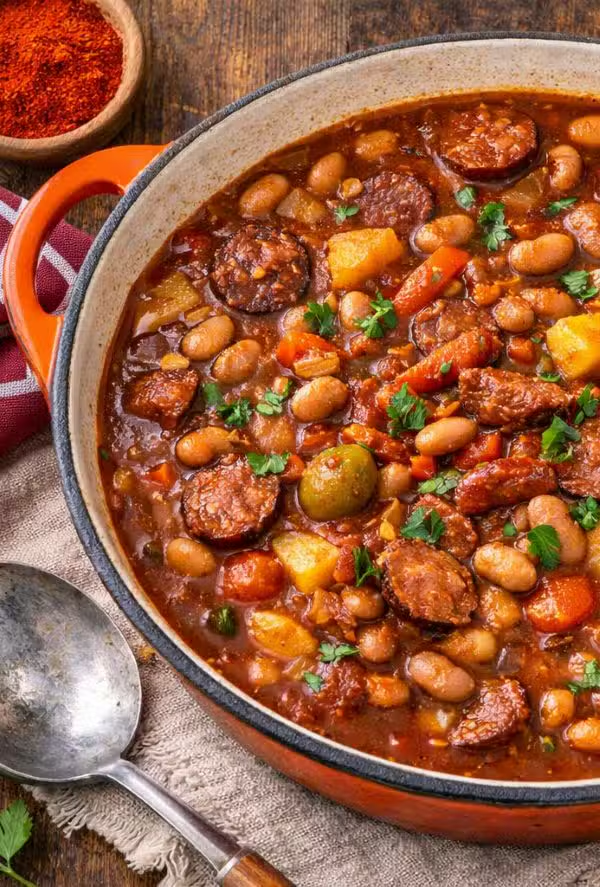
Properly prepared Babgulyás should be fragrant and slightly dense thanks to the natural starch released by beans and potatoes.
Traditionally, Babgulyás is cooked in a bogrács, a cauldron suspended over an open fire. Slow evaporation and light smokiness contribute significantly to the dish’s character.
It is often served with small dumplings called csipetke, made by pinching a simple flour-and-egg dough directly into the soup.
Nutritional values per 100 g
Calories: 150 kcal
Protein: 11 g
Fat: 6 g
Carbohydrates: 13 g
Where to taste it in Hungary
In Budapest, many traditional csárdas still prepare Babgulyás following family recipes handed down through generations. Across the rural areas of the Great Hungarian Plain, especially during food festivals and village celebrations, it is still cooked outdoors in communal cauldrons.
Wine pairing
The spicy depth of Babgulyás finds balance with a fresh yet structured red such as Kékfrankos by Weninger, capable of supporting paprika and beef without heaviness. A Kadarka from Heimann & Fiai works beautifully as well, more delicate and historically tied to Hungarian cuisine. Staying in Italy, Schiava Alte Reben by Garlider offers elegance and vibrant drinkability alongside the soup.