Directions

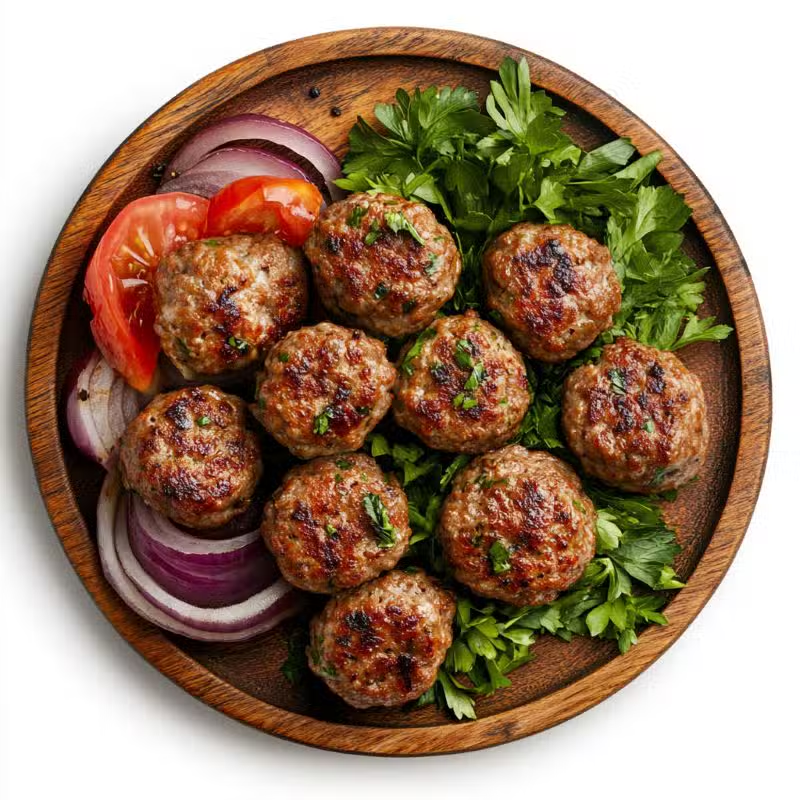
Köfte are spicy meatballs typical of Turkish and Middle Eastern cuisine, made with minced meat, spices and herbs. The term “köfte” comes from the Persian “kufteh”, which means “pounded meat,” indicating the ancient practice of grinding meat to obtain a homogeneous consistency. This dish has deep roots in the culinary history of the region, with numerous variations spread throughout the Middle East, the Balkans and the Indian subcontinent.
In Turkey, köfte are a staple of local cuisine, with over 200 regional variations. Each region boasts its own version, using different combinations of meat (lamb, beef, or a mixture of both) and cooking methods, such as grilling, baking, or frying. Köfte are often served with sides such as pilaf rice, fresh salads, or in pita bread, accompanied by dips such as yogurt or hummus.
Renowned are the “İnegöl Köftesi,” a variant originating from the city of İnegöl, in the province of Bursa. Today, İnegöl is very famous for its köfte, thanks to the influences of travelers from the Balkans who brought contaminations and new flavors, but which have fused perfectly with the local cuisine. But enough chit-chat and let’s try this traditional recipe to prepare the legendary Turkish köfte.
Ingredients
For 4-6 people
- 500g minced lamb or beef (or a combination of both – a ratio of 70 lamb to 30 beef is acceptable)
- 1 medium onion, finely chopped
- 2 cloves garlic, minced
- 1 slice of stale bread, soaked in milk and squeezed
- 1 egg
- 2 tablespoons chopped fresh parsley
- 1 teaspoon ground cumin
- 1 teaspoon sweet paprika
- ½ teaspoon ground black pepper
- Salt to taste
- Olive oil for cooking
Procedure
- Dough preparation : In a large bowl, combine the minced meat, chopped onion, garlic, soaked and squeezed bread, egg, parsley and spices. Mix well with your hands until the mixture is smooth.
- Resting the dough : Cover the bowl with cling film and let it rest in the refrigerator for at least 30 minutes. This allows the flavours to blend and makes it easier to form the meatballs.
- Shaping the köfte : Take small quantities of dough and shape them with damp hands into oval or cylindrical shapes, approximately 5-7 cm long.
- Cooking : Heat a grill or nonstick skillet with a drizzle of olive oil over medium-high heat. Cook the köfte for 3-4 minutes on each side, until golden brown on the outside and cooked through on the inside.
- Service : Serve the köfte hot, accompanied by pilaf rice, fresh salad and yogurt sauce.
Advice
- For a lighter version, köfte can be baked at 180°C for about 20 minutes, turning them halfway through cooking. They will be sadder and paler and also absorbed, but much healthier.
- Add chopped chili pepper to the mixture for a spicy and titillating note for the palate and the day after.
- Köfte can be made ahead of time and refrigerated until ready to cook, or you can bake them and then freeze them. When you don’t know what to cook for dinner, pop a dozen or so in the oven and bring them back to life.
Nutritional values per 100 g
- Calories : 240 kcal
- Protein : 16 g
- Fat : 18 g
- Carbohydrates : 3 g
- Fiber : 0.5 g